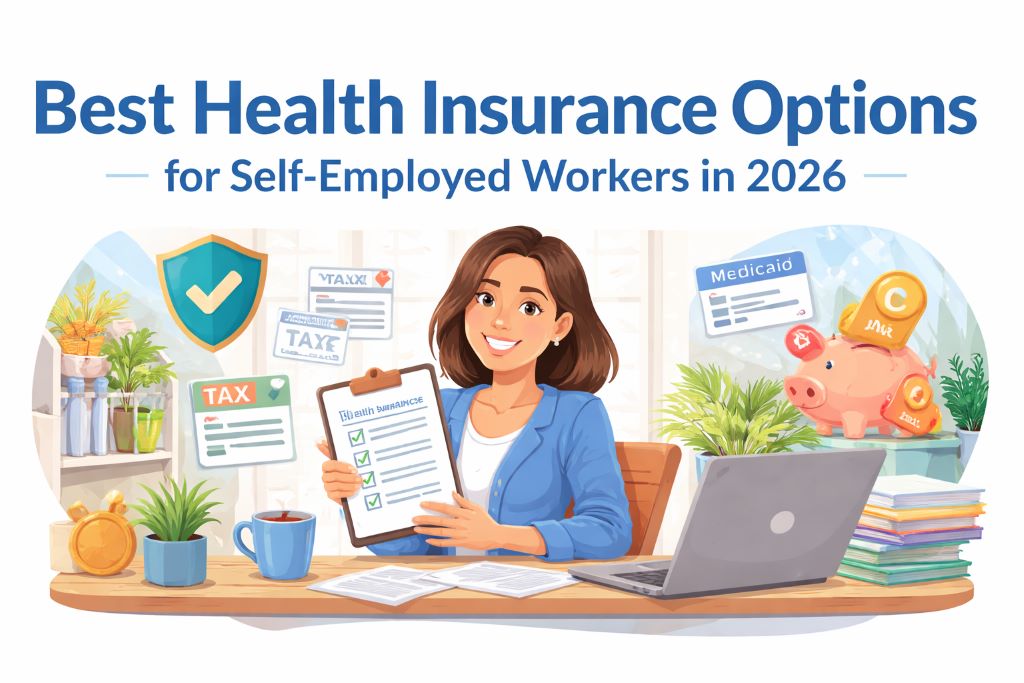
Plain-English promise: If you’re self-employed, your “best” health insurance choice usually comes down to 3 things: (1) whether you qualify for Marketplace savings, (2) how often you use care, and (3) your risk tolerance if something big happens.
Note: This is educational, not legal or tax advice. Rules vary by state and your situation.
Quick Answer: The Top Options (Most Common Winners)
- #1 Most people: ACA Marketplace plan (HealthCare.gov or your state Marketplace) — especially if you qualify for premium tax credits.
- #2 If you want predictable costs: ACA Silver plan (often best value if you qualify for cost-sharing reductions).
- #3 If you rarely use care: ACA Bronze or HSA-eligible plan (if available) + a savings buffer.
- #4 If you just left a job: COBRA (short-term bridge) or a Marketplace plan using a Special Enrollment Period.
- #5 If income is lower: Medicaid (in expansion states) or Marketplace with strong subsidies.
Step 1: Know Your 2026 “Decision Fork”
Fork A: Can you get Marketplace savings?
If you qualify for a premium tax credit, the ACA Marketplace is usually the best deal for self-employed people because it can reduce your monthly premium. The credit is reconciled on your tax return. The IRS explains the premium tax credit basics and the required tax form (Form 8962).
Fork B: Are you buying without Marketplace savings?
If your income is too high (or you choose not to use the Marketplace), you’re comparing “full price” ACA plans, off-Marketplace ACA plans, or limited alternatives — and this is where people can overpay if they don’t shop carefully.
Option 1: ACA Marketplace Plans (Usually Best for Self-Employed)
Why it’s strong: Marketplace plans must cover essential health benefits and can’t deny you for pre-existing conditions. If you qualify, subsidies can drastically reduce your cost.
201 Views
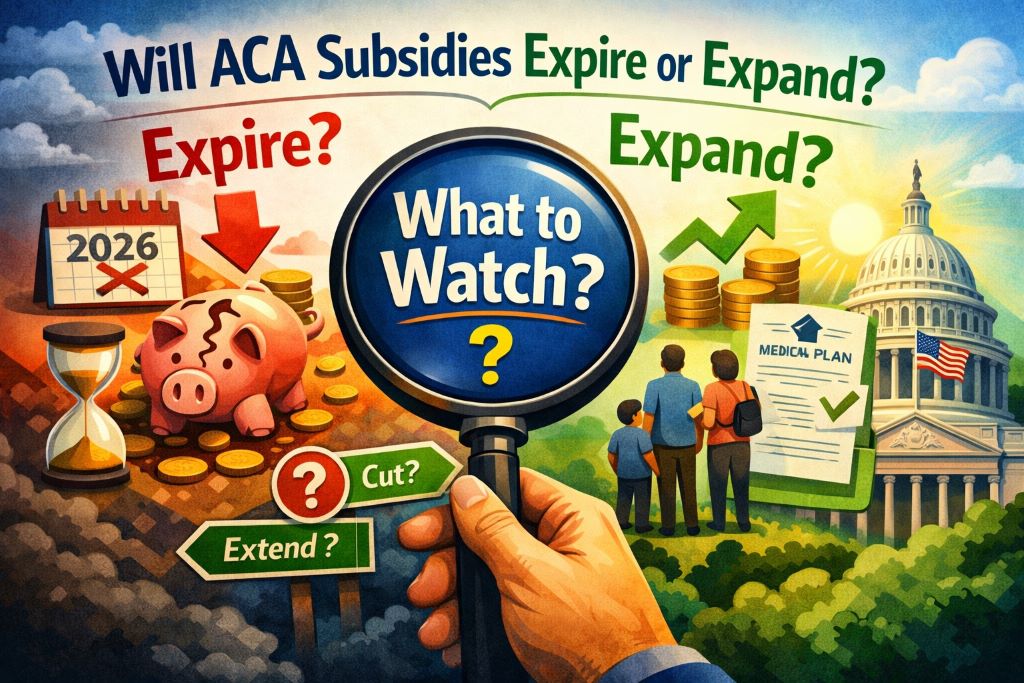
Read-aloud cue: If you’ve heard “ACA subsidies are ending” and thought “wait… what is ACA?” — this is the plain-English explanation, what already happened in 2026, and what could still change next.
First: What is the ACA?
ACA stands for the Affordable Care Act (also called “Obamacare”). It’s the law that created:
- Health Insurance Marketplaces (HealthCare.gov and state marketplaces)
- Rules for insurance plans (like covering pre-existing conditions)
- Financial help for many people who buy their own coverage (these are commonly called “subsidies”)
What are “ACA subsidies”?
Most of the time, when people say “ACA subsidies,” they mean the Premium Tax Credit (PTC). It’s money (usually applied monthly) that lowers what you pay for your health insurance premium if you qualify based on income and household size.
The Key Detail
There were extra-large (enhanced) subsidies that ran from 2021 through 2025. Those enhancements made coverage cheaper for many people — and they also helped some higher-income households qualify when they normally wouldn’t.
What happened in 2026?
The enhanced subsidies that boosted Marketplace affordability in 2021–2025 expired on January 1, 2026. That does not mean all subsidies disappeared. It means the system snapped back to the older ACA subsidy rules.
220 Views
Health Insurance Disclaimer
(Website Use & Educational Content)
Disclaimer:
The information provided on OnlineHealthIns.com is for educational and informational purposes only. It should not be considered legal, financial, or health insurance advice. While we strive to keep our content accurate and up to date, insurance laws, regulations, and plan details may change at any time.
- We are not an insurance company, and we do not guarantee coverage, plan availability, or eligibility for government programs.
- Any insurance decisions should be made only after reviewing official plan documents and consulting with a licensed insurance agent, broker, or advisor who can provide personalized guidance.
- References to government programs (such as Medicare, Medicaid, ACA Marketplace plans, subsidies, or tax credits) are provided for general understanding and do not guarantee qualification.
- OnlineHealthIns.com assumes no liability for errors, omissions, or any outcomes related to the use of this information.
By using this website, you acknowledge and agree that you are responsible for verifying any insurance information with official sources or licensed professionals before making decisions about coverage.